


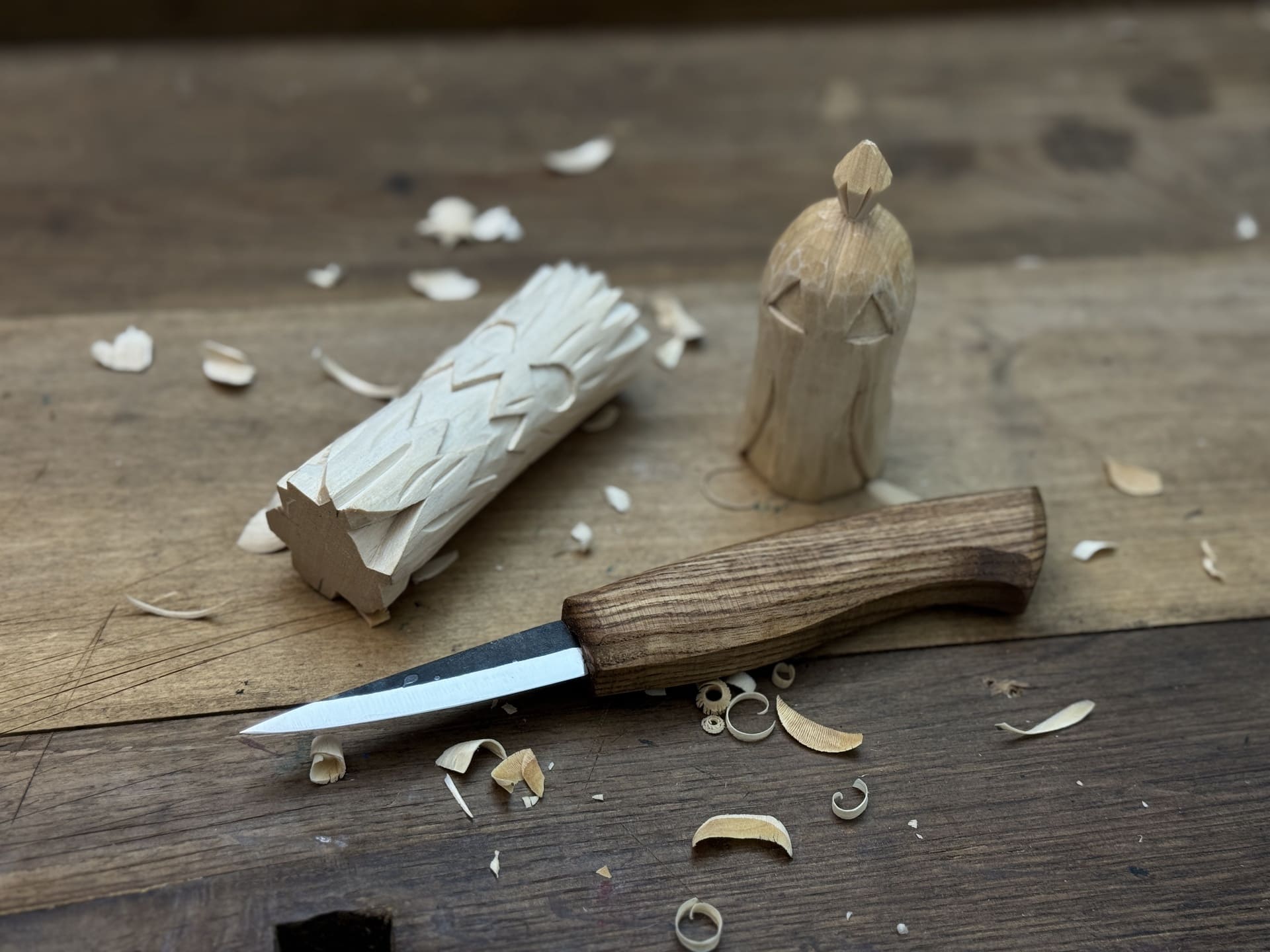
What Is a Wood Carving Sculpture?
What is a wood carving sculpture? Think of it as the art of removing material to reveal a hidden story. While many people define it as shaping wood into a three-dimensional form, a true carving sculpture goes beyond basic decoration. It is about bringing a unique figure or object to life.
Here is how the process works:
- You start with a solid block of wood. At this stage, the goal is to see the potential within the raw material.
- Using a steady hand and a sharp knife, a carver chips away the excess wood. Depending on the level of detail, they will also use various tools like chisels or gouges to refine the shape.
- While wood carving often includes making everyday items, sculpture carving focuses on a final artistic vision.
- In the end, a wood sculpture is a perfect mix of patience and skill. It turns a wooden piece into a lasting work of art.
How a carved sculpture differs from basic whittling
Sculpture carving and whittling are two distinct ways to approach carving wood. Whittling is all about simplicity and minimalism, usually involving fixed blade or portable knives to cut away thin chips. The final piece often has a rugged, textured look with tool marks.
Wood carving sculpture is a full-setup type of craft that uses a much wider range of tools. The process of carving a sculpture generally involves carving in the round, where the wood is clamped to a workbench so you can use both hands for better control.
In short, while whittling is perfect for making quick, charming figures, the sculpture carving itself focuses on using a full set of equipment. This type of sculpture art transforms a raw block of timber into a polished, professional sculpture through advanced carving techniques.
Why wood sculpture carving focuses on form, depth, and dimension
Wood sculpture carving focuses on form, depth, and dimension. By shaping strong outlines and clear planes, sculptors give the work balance and structure.
Depth is especially important, without it, carving a sculpture can look flat, while deeper cuts and shadows make wood carvings feel solid and lifelike. Careful attention to dimension is what turns simple wood sculpting into expressive art instead of just surface decoration.

What Makes Wood Carving Sculpture Different From Other Carving Styles?
A wood carving sculpture speaks for itself—it is designed to be a true three-dimensional form. Because of this, the proportions, shadows, and details need special attention; they create the overall look that makes the form appear realistic.
Relief carving vs sculpture carving
The main difference between relief and carving sculpture is how they relate to the background. In relief, the design is carved into a flat panel so it looks raised from the surface, almost like a drawing with depth.
In wood sculpture carving, which is often called round carving or round wood carving, the background is removed completely, and the artist shapes a block into a free‑standing figure. Relief relies on shallow cuts to create depth, while a wood carved sculpture builds real volume.
Why sculpture carving is usually viewed from multiple angles
A wooden sculpture exists in three dimensions. Carvers use different sculpture carving tools, turning the piece often to check proportions from the front, back, and sides. One trick is to study the outline: if the silhouette looks off, the whole figure feels unbalanced. By watching how light and shadows fall across the piece during wood carving, a wood-carved sculpture turns into a lively piece of art.
What Is Carving in the Round?
Unlike styles that remain attached to a flat background, carving in the round treats the piece as a whole. It is the foundation of creating a wood carving sculpture that looks realistic.
Why carving in the round is central to sculpture work
Sculpture carving itself moves the artist beyond a flat view, giving the work real space and presence. Beginners often start with relief carving, but moving to carving in the round is an important step because it helps you understand shape and volume better.

How round carving changes the way a project is shaped
The first stage involves blocking out, which means cutting away large sections to reveal the basic outline from the front, back, and sides. Once the main planes and proportions are correct, it is the right time to add details. This step‑by‑step approach is what makes a tree carving or any free‑standing piece balanced and lifelike.
How Do You Start Carving a Sculpture?
What is a wood carving sculpture from a practical standpoint? Specifically, how quickly can you move from clearing away chunks of wood to the fun part—adding details to the project? Here are a few general rules to follow.
Choosing a simple form for a first project
Starting simple is the golden rule. It is best to pick a subject with a clear, rounded silhouette like a bird or a basic gnome. You want to avoid thin, fragile parts that might snap off while you are still learning. These kinds of projects are perfect for practicing how to block out the main shapes with a basic round carving knife without getting overwhelmed.
Building shape gradually instead of cutting deep too early
The best way to shape wood is by taking small, thin slices rather than trying to hack out deep chunks. By removing thin layers, you can keep a closer eye on the grain and fix the proportions as you go. If you go too deep too early, you might lose wood that you actually need for the later stages of your carving sculpture.
Essential Tools Used in Wood Carving Sculpture
There are two main stages to every project: bulk removal and fine detail. As your skills grow, your toolset usually does, too. You will start with heavy-duty tools like large chisels and mallets for the rough work, then move on to finer tools like palm chisels or micro-gouges for the finish. Choosing a professional carving knife set, sculpture projects become much easier as you transition between phases.

Why carvers combine different blade types for shaping and detail
A sturdy knife works great for roughing out, while U-shaped gouges are the go-to for hollowing out curves and clearing away waste wood. Flat chisels are best for leveling off surfaces, while specialized detail knives are used for the tricky parts, like facial features. This variety is what makes wood carving sculpture such a versatile craft.
How the right tools improve control, safety, and surface quality
Matching the right tool to the job is the secret to making great carvings. Proper tools reduce the physical effort, which makes the work safer.
Here are some of the most commonly used tools in wood carving sculpture:
- Bulk removal:
- Large gouges (deep sweeps): Used to clear out large volumes of wood quickly. Often paired with a mallet for extra power.
- Straight chisels: Flatten planes and remove chunks in a controlled way.
- Sloyd knives: Quickly whittle down the wood before switching to finer tools.
- Mallet-type of tools: Help create deep, efficient cuts, especially when working with hardwoods.
- Refining form:
- Medium gouges (#5–#7 sweeps): Used for shaping anatomical forms and smooth transitions between sections.
- Skew chisels: Help refine edges and reach into tight areas.
- Fine detail and finishing:
- Detail knives: Small, thin blades for precise cuts, sharp edges, and facial features.
- V-tools: Create sharp lines, hair textures, and decorative separations.
- Small U-gouges: Carve narrow grooves and organic details.
- Sandpaper: Used for final refinement if you prefer a smooth finish over a tooled look.
Core Techniques for Shaping a Wood Carving Sculpture
When working on a wood carving sculpture, the process follows a clear sequence: start with the largest shapes, then move toward smaller details. Each stage builds on the last, guiding the piece from rough block to finished figure.
Rough shaping, refining form, and adding definition
The journey of carving sculpture begins with roughing out the silhouette—head, torso, limbs, or other main parts. Once proportions look right from every angle, the carver smooths heavy cuts into natural transitions. Only after the structure feels solid, sharp lines and textures get added.
Working with the grain to avoid tear-out and mistakes
Grain direction is key in sculpture carving itself. Wood fibers run in parallel, and cutting with them produces clean, smooth surfaces. Cutting against the grain can tear fibers and remove chunks unintentionally.

Common Mistakes Beginners Make When Carving Sculpture
Even skilled artists face challenges when they first begin. Most frustrations come from rushing or ignoring how the wood behaves.
Removing too much material too early
Jumping straight into details, like carving a face, often leads to mistakes. If too much wood is removed before proportions are set, the figure may look unbalanced. Staying oversized until the layout is clear prevents this problem.
Ignoring grain direction and tool sharpness
Messy cuts often come from dull blades or poor grain awareness. A dull tool crushes fibers instead of slicing them, leaving ragged edges and increasing the chance of slips. Regularly sharpening a carving knife set for sculpture solves most technical issues.

How to Choose the Right Wood for Sculpture Carving
Not all trees are created equal. The wood you choose will dictate how much effort you have to put into every cut and how much detail the final piece can actually hold.
Why softer woods are easier for beginners
When carving sculpture, basswood is often recommended because it has a fine, even grain and is soft enough to cut easily. This lets beginners focus on control rather than fighting the material.
What wood characteristics affect detail and finish
Different woods behave differently under the blade. Tight‑grained species hold fine details, while porous woods can be brittle. Oil content and hardness also influence how the surface looks—some polish naturally, others suit paint better. Exploring different wood carving ideas helps carvers match the right wood to the right project.
Share:
What Is Food Safe Wood Finish (and Which One Is Best)?
Best Gifts for Woodworkers and Carpenters