


What “food safe wood finish” really means
A food safe wood finish is a protective coating applied to wood in kitchen tools. It prevents the surface from absorbing liquids and bacteria while keeping food free from harmful chemicals.
Food-safe vs food-contact-safe vs “non-toxic when cured”
The terms used for food finishes can be confusing, especially when used interchangeably. Here is a clear, practical breakdown.
- Food-safe (or food-grade)
A food safe finish for wood is safe even in liquid form. If a tiny amount is accidentally swallowed, it will not harm you. These finishes are usually simple and natural, with no harsh solvents.
They are often based on oil or wax. Common examples include beeswax, mineral, linseed oil, and tung oil. These finishes soak into the wood instead of forming a hard surface layer.
Best use: Items that are regularly exposed to a knife, such as wood cutting boards, where the surface can be scratched or cut. This is why these finishes are often considered the best food safe wood finish for everyday kitchen tools.
- Food-contact-safe
This category includes most clear finishes after they have fully cured. While they are unsafe in the can, the solvents either evaporate or become inert over time.
Once cured, these finishes are hard, durable, and water resistant. They are commonly used as a food safe wood bowl finish, where food touches the surface but the finish is not scraped away.
Important: If you can still smell the finish, it is not ready for food contact.
- Non-toxic when cured
This term means the finish is toxic while wet but safe once it hardens. It is often used for synthetic coatings.
The key difference is that these finishes form a plastic-like film. While they will not leach chemicals after curing, they are not ideal for surfaces that get scratched. That is why they are generally avoided as a food safe finish for wooden spoons, where wear is constant.
Curing vs drying — why it matters for safety
Drying and curing are not the same, and the difference matters. Drying is when the surface feels dry to the touch. At this stage, solvents may still be present, and the finish is not stable or safe.

Curing is a chemical process where the finish becomes fully hard and inert. This often takes around 30 days, depending on conditions.
Only after curing can a finish truly be considered safe for food contact. This is especially important when using products like a mineral oil food safe wood finish, which may feel ready quickly but still benefit from time to fully settle.
Best food safe wood finish options (quick comparison)
If you are ready to start exploring the main categories of a food safe wood finish, you will find three options: penetrating oils, oil and wax blends, and film finishes. Each option provides a different balance of durability, moisture resistance, and overall feel.
Penetrating oils (easy to refresh)
Penetrating oils soak into the wood grain, filling pores. This keeps the surface looking natural and smooth. They are simple to apply and reapply, just wipe on another coat when the surface looks dull. Because they do not build a hard layer, they will not crack or peel. Protection is moderate, so they are best for items with light moisture exposure. A classic choice here is mineral oil food safe wood finish.
Oil + wax blends (better feel, moderate protection)
Oil and wax blends combine penetrating oil with a soft wax layer. This creates a smooth, warm feel while sealing pores for extra protection. The wax adds resistance to everyday spills. These finishes are often used for kitchen tools. Refreshing is easy, but these wood finishes are not as durable as films. A common option is beeswax wood finish food safe, often paired with natural oils for balance.
Film finishes (more waterproof, higher prep needs)
Film finishes create a hard, continuous layer on the surface. They protect against heat and abrasion more effectively than oils and are considered to be a food safe waterproof wood finish. Once cured, they are clear and durable, often used on furniture and as a food safe wood finish for countertops. But prep takes more effort: films require sanding between coats and careful application. And even when cured, film finishes are usually avoided on cutting boards and wooden spoons because knives can damage the coating and let moisture seep underneath.
Mineral oil food safe wood finish (how it works)
Food-grade mineral oil is a non-drying petroleum product that woodworkers rely on for its safety and ease of use. Instead of hardening, it stays liquid inside the fibers, creating a protective layer that keeps the wood hydrated, helps prevent cracks, and never goes rancid.
Pros/cons and where it’s best (boards, spoons, bowls)
Mineral oil is a non-toxic, easy-to-refresh finish, but it is not without its downsides.

Pros:
- Completely food-safe: Non-toxic and flavorless, so it does not affect food quality.
- Zero cure time: Unlike drying oils, it can be used immediately after wiping.
- Self-healing: Because it stays liquid, it flows into knife marks instead of chipping or peeling. This makes it especially valuable as a food safe wood finish for cutting board, where preventing cracks and splits is essential.
- Budget-friendly: Affordable and easy to find at pharmacies as USP mineral oil.
Cons:
- High maintenance: It washes out with soap and needs frequent reapplication.
- Oily residue: Over-saturated wood may feel greasy.
This finish is also a trusted food safe finish for wooden spoons, which face constant scrubbing and moisture. Thanks to easy upkeep, mineral oil works well as a food safe wood bowl finish for functional bowls too. However, it is less suited for decorative pieces that require a permanent, glossy sheen.
How to apply mineral oil (step-by-step)
Applying mineral oil focuses on soaking the wood rather than building a surface film. Here are the key steps:
- Prep the surface: Make sure the wood is clean and dry. If the grain feels rough from washing, lightly sand with 220-grit paper and wipe away all dust before you start.
- Apply generously: Pour mineral oil directly onto the wood or a clean cloth. Spread it evenly over the surface, including edges and the underside, until the wood looks wet and stops absorbing oil. This step is essential for building a reliable layer of the food safe finish for wood.
- Let it soak: Allow the oil to penetrate the fibers for 15–30 minutes. For a new or very dry cutting board, leave it for several hours or overnight for deeper saturation.
- Wipe away excess: Remove any leftover oil with a dry cloth. The surface should feel smooth and hydrated, not sticky. This self-repairing quality is why mineral oil is often chosen as a food safe wood finish for charcuterie board. It minimizes cracks, guards against a chip.
How often to reapply + maintenance schedule
How often you need to reapply depends on how much the item is used and washed.
For everyday kitchen tools treated with a mineral oil food safe wood finish, once a month is usually enough.
Heavily used boards may need a refresh every couple of weeks. A simple way to know it is time is when the wood starts to look dull, or when water no longer beads on the surface but soaks in instead.
Keeping up with maintenance is easy. Wash with mild soap and warm water, let the piece dry completely and then reapply oil.
Beeswax wood finish food safe (and oil + beeswax mixes)
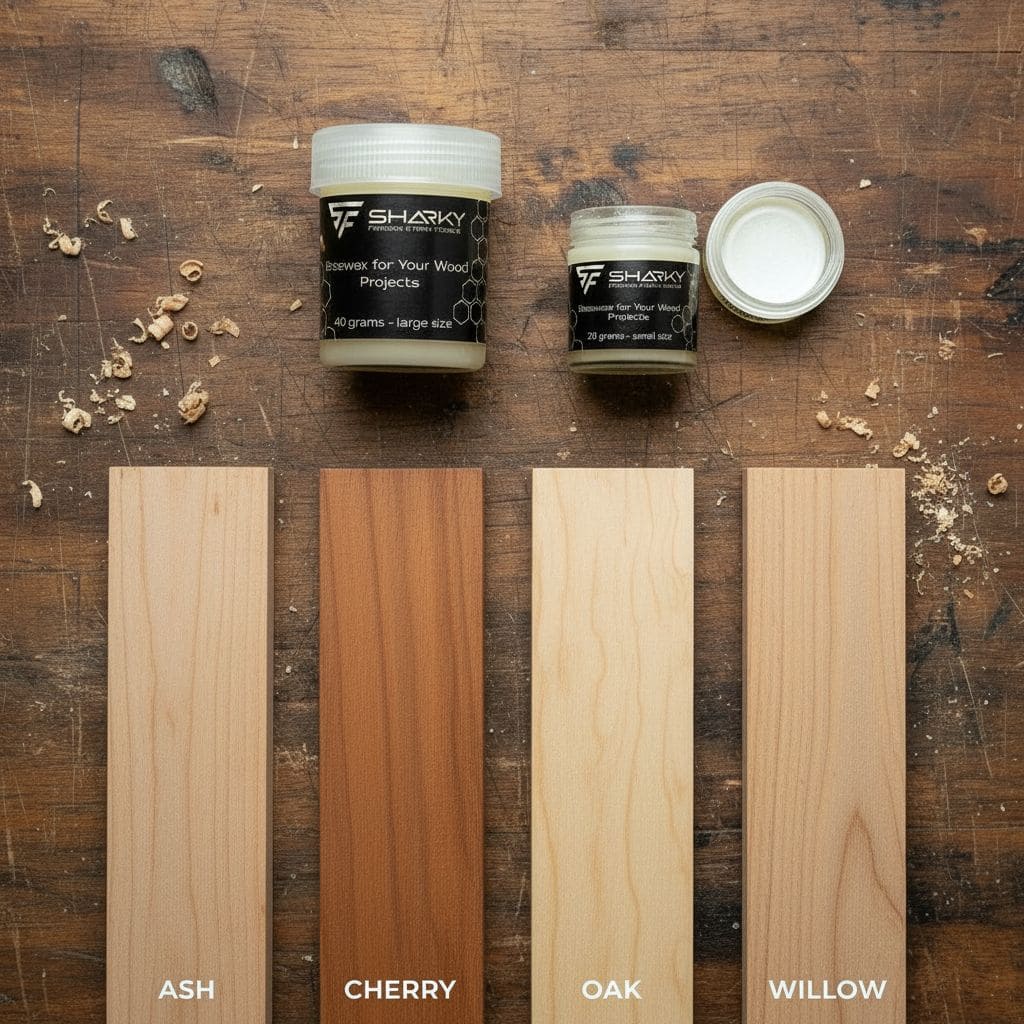
Beeswax is a natural way to protect wooden utensils. It forms a barrier against moisture and gives the wood a soft glow. Used alone or blended with oils like mineral oil, it seeps into the grain and coats the surface to seal pores. This makes it a reliable choice for anyone looking for a beeswax wood finish food safe solution.

Food safe beeswax wood finish: when it’s worth it
Adding a food safe beeswax wood finish improves water resistance compared to oil alone. Beeswax hydrates the wood and slows down drying after washing.
Beeswax also enhances the natural grain. It has a low melting point and does not harden into a tough film, which is why it is not the best choice for items exposed to high heat or heavy scrubbing. Instead, it works best as a protective top layer, adding water resistance.
How to apply beeswax finish (buffing + curing)
Applying beeswax is simple. Start with a clean, dry surface, ideally one that already has a base coat of oil.
Rub the wax or wax-oil blend onto the wood with a lint-free cloth in circular motions to warm the wax so it sinks into the pores. Let it rest for 15–30 minutes, then buff with a fresh cloth. This leaves a smooth, natural glow and creates a dependable food safe wood finish that combines beauty with protection.
Beeswax vs mineral oil — which lasts longer?
Beeswax finishes generally hold up longer than pure mineral oil because the wax plugs the pores and clings to the fibers even after washing.
Mineral oil, on the other hand, tends to rinse out more quickly with soap and water. The best choice would be to use mineral oil first for deep hydration, then add a beeswax topcoat to lock in moisture and guard against cracking.
Food safe waterproof wood finish
A food safe waterproof wood finish needs to protect the surface from spills while staying non-toxic. The real challenge is choosing something that will not wear down after lots of washing and exposure to humidity.
The “waterproof” myth: what you can realistically expect
Even with multiple coats, wood is still wood—it expands, contracts, and lets a little vapor through. A good finish will not make it completely waterproof, but it will buy you time. Spills bead up on the surface so you can wipe them away before they cause stains or warping. Just do not expect any food safe finish for wood to survive soaking in water or the dishwasher cycle.
Best choices for maximum water resistance
Tung oil is one of the best food safe wood finish choices when durability really matters. It hardens inside the wood fibers, creating a lasting seal that stands up to moisture better than non-drying oils like mineral oil.
How to improve water resistance with proper prep
Good prep makes all the difference. Start by sanding the wood. Lightly mist it with water, let it dry, then sand again—this keeps the texture from getting rough later. Before applying the finish, make sure the surface is spotless and free of dust.

Best food safe wood finish by project
All food safe wood finish options are designed to keep out moisture and bacteria, but the right choice depends on the project. A cutting board needs a tougher, more protective finish than a decorative serving tray. Let’s break down which finishes work best for different types of wood projects.
Food safe finish for wooden spoons
Wooden utensils such as spoons experience constant wear from hot liquids and repeated scrubbing. For this reason, a food safe finish for wooden spoons is usually a simple choice, such as non-drying mineral oil or an oil-and-wax blend.
Since these items are used heavily, a film-forming finish would not last. It would crack and peel under the high temperatures of cooking. A penetrating oil is a better option because it makes maintenance straightforward. When the wood begins to feel rough, a quick reapplication restores the moisture barrier.
Food safe wood finish for cutting board
Cutting boards need a finish that can handle the constant impact of sharp blades without losing its protective seal. Most woodworkers prefer a food safe wood finish for cutting board care, such as mineral oil or a board butter blend. These finishes stay liquid within the wood fibers, allowing the surface to self-heal after knife use.
Food safe wood bowl finish
For bowls that are used for wet foods, a food safe wood bowl finish such as tung oil or linseed oil works especially well. These oils harden inside the wood fibers, creating lasting resistance to moisture.
If the bowl is meant only for dry goods or decoration, a beeswax-rich polish is a great choice.
Food safe wood finish for charcuterie board
A food safe wood finish for charcuterie board is often a blend of beeswax and food-grade mineral oil. This mix provides enough water resistance to handle juices from cheese, fruit, or cured meats. Natural wipe-on oils are preferred over sprayed coatings because they preserve the organic look and feel of the wood.
Food safe wood finish for countertops
Wood countertops need the toughest finishes, as they face constant moisture, spills, and heavy cleaning. The best food safe wood finish for countertops is one that cures and hardens, such as hard-wax oils or pure tung oil. These finishes create a strong, long-lasting barrier that stands up to water and stains far better than simpler oils.
Application basics that make any finish perform better
The success of a food safe wood finish depends less on the brand and more on how well the wood is prepared before application.
Surface prep (sanding grit guide)
Sanding is the first step to achieving a durable coating. It removes tiny imperfections where moisture can build up.
- Sanding: Begin with 120 or 150 grit to level the surface and erase tool marks.
- Grain raising: Lightly mist the wood with water, let it dry, then sand again to smooth raised fibers.
- Smoothing: Use 220 or 320 grit for a silky feel without closing the pores too much.
- Removing dust: Wipe the piece with a tack cloth before applying any liquid.
End grain sealing tips
The ends of a board are the most vulnerable spots, often drying out and cracking if left untreated.

- Saturation method: Apply oil repeatedly until the wood no longer absorbs it.
- Adding wax: A food safe beeswax wood finish blended with oil creates a stronger seal against water.
- Vertical storage: Stand the board upright after treatment to allow even airflow.
How long to wait before using the item (cure times checklist)
Different finishes require different wait times.
- Non-drying oils: A mineral oil food safe wood finish is ready to use immediately after wiping away the excess, since it never hardens.
- Curing oils: Options like tung or linseed oil need 7 to 30 days to fully polymerize into a solid barrier.
Care & maintenance (keep it food safe long-term)
Good cleaning habits and regular reapplication keep woodenware safe and fresh. Here are some common care and maintenance recommendations you may want to include into your care routine and things to avoid.
Cleaning without stripping the finish
Harsh cleaning methods can strip away the protective oils. The goal is to sanitize the surface and leave as much of the protective barrier as possible.
- Mild solutions: Wash with warm water and gentle dish soap.
- Scrubbing: Use a soft sponge or cloth.
- Drying: Always towel dry right after washing.
- Natural sanitizers: Vinegar or lemon with salt can disinfect after raw meat.
When to re-oil / re-wax
Every kitchen is different, so watch how the wood behaves.
- Water test: Drops should bead up; if they soak in, the finish is gone.
- Tactile feedback: If the surface feels rough, it is time to refresh with the best food safe wood finish for your item.
What to avoid (dishwashers, soaking, harsh cleaners)
To keep your finish strong, avoid habits that damage wood.
- Dishwashers: Heat, water, and detergents will crack the board.
- Soaking: Never leave woodenware soaking in a sink.
Extreme heat: Do not place hot pans directly on oiled surfaces, as this can damage even a food safe waterproof wood finish.
Share:
The Best Wood Tool Handles
What Is a Wood Carving Sculpture? Tools and Techniques